Mount Ena 恵那山
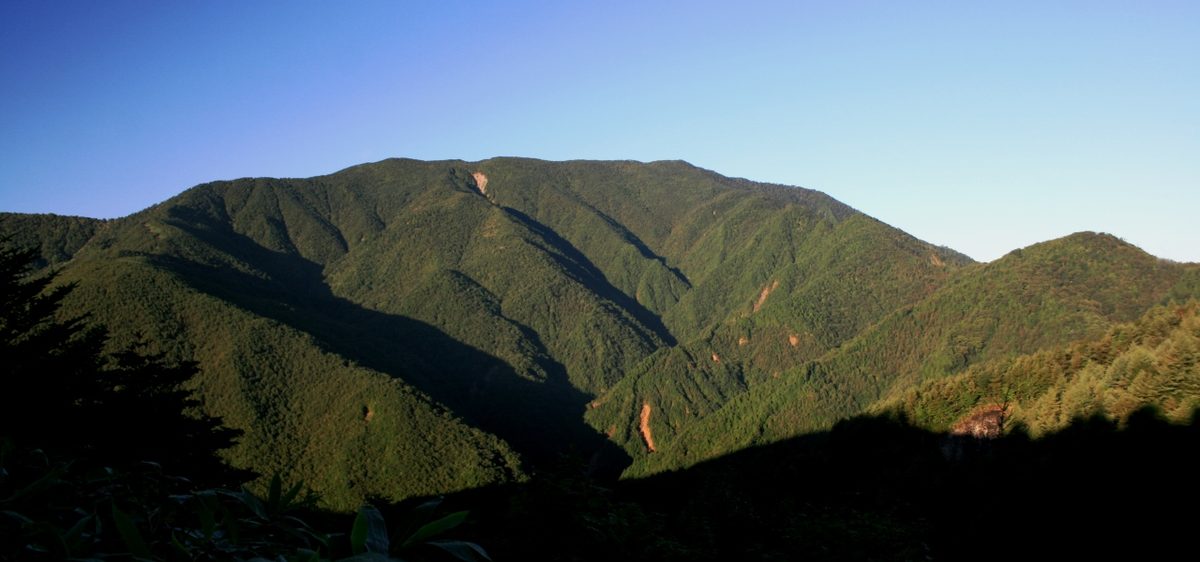

| Elevation | 2,191 m (7,188 ft) |
|---|---|
| Location | Nagano, Gifu, Japan |
| Region | Chubu |
| Famous Mountains list | No. 76 of the 100 Famous Japanese Mountains (Nihon Hyaku-meizan) |
| Coordinates | 35.44306° N, 137.59694° E |
Mount Ena Nagano Akichimura and Gifu, at the southernmostmostmostmost point of the mountain, Mount Tse - tung. The the 100 Famous Japanese Mountains and the new flowers have been chosen for the hundred-hundreds. Gifu is designated as the Sousshan prefecture Nature Park.
Overview
This is the highest peak of beauty, which can look down on the city of Nakazuzugawa, and from far and wide areas of the dense tributary and Okazaki plain and beyond, and from far and wide Iseland, where you can hope for that large mountain range. To the southeast of the highest point of peak altitude 2,191 meters, there are the first trigonometric points, the obituary towers, and the Hashito Hijimoto. The summit platform has tall coniferous coniferous trees around it, such as corn and peppers, so the view is not very promising. The Mount Ena tunnel in the central automobile road runs just below the Tohoku Plateau Platform in the northeast. At the foot of Mt. Yamayama is a stable and a wife's lodge on Nakayama. Iseshima Village, which was born in the stable, is a mountain that viewed as a child and is painted in "before dawn." It also appears in The Letters in the cement barrels by Protourian Ipaki.
It comes from the mountain name
They also called it the Scorpion Mountain because it appeared that the ship had been lowered at an angle. Matsumoto-kun's resuscitation says, "The Great Lord of Heaven was born here and buried in this mountain." This is the name of the mountain. It was also called "Wafe Mountain" on the Japanese side.
Environment
The zXQ076X growths, however, have a vertical distribution that extends from lowlands, mountain ranges, and sub-dwellings to plant reserves. The top of the mountain is a coniferous band of coniferous trees, such as the daisies, the cochineals, and the pontice. Until the early Edo period, the west side was a beautiful forest of trees, trees, potatoes, and so on, but it was destroyed by the deforestation that followed. On other slopes the forest road is maintained, and cedars and caral pines are planted. On the climb road, you can see flowers such as Iwawa, Sarasadan, Shaknag, Shodakkakakakashama, and Bakamaren.
Human history
1893 - May 11th - English Walter Weston reached his first climb as a foreigner from the pre-morning route. September 26 - a massive tsunami of sandstorms under the mountains) occurred. Three deaths, six serious injuries, 120 submersibles, 306 floors, and 10 bridge streams in Tokyo. The year 1951 was designated November 22nd - the Central Alps National Park after Nagano. - The climbway of the Hanzawa Route from the Blackwood Road has been fixed. On April 21st (35) - The author of the 100 Famous Japanese Mountains - Akira Owada, climbed from the Black Coast, stepped down the Kobe Route, and, the next day, stayed in the Kajijiji house. August 23rd - the Mount Ena tunnel of the central automobile road opened. - The Hebrews opened the ski field. October 7 - A mountain trail from the Nagano on the XX102X has been opened. The Mount EnaWeston Park was established on the river in Nakakawa City in 2001 - and a copper statue of Weston was installed. - A wooden estuary platform was built. June 2nd - there was an accident when the Eastern airship helicopter in operation crashed near the top of the mountain. On November 15th about 10:40 a.m. The climber on the climb is said to have been hit and injured.
Mount Ena
The Mount Ena is listed as mountains and spores of old age, and the land where the swallows and the swallows crossed the mountain pass of the mountain, and the land where they paid off their phosphorous clothing when the great gods were born in Shikoku. This ovum is the membrane and placenta that wraps the fetus. In Mount Ena there is a blessed Shinto shrine whose gods are the principal gods of the mountains and Isanami, and on the top of the mountain, there is the Akiramoto and the Akira at the foot of the mountain. Sunlight opened Mount Ena. After that, each year a student came to the prayer, and the night before, he went up the mountain climbing. Also, during the Meiji period, the maintenance of roads and mountaineering has made it a practice for many of the public to come to see you in white. At the moment, there are seven companies located in the House of the Sun, on the top of the Mount Ena, in the courtyard of the Shinto shrine. At the bottom of Nakakawa City, there's a Shinto shrine. I'm sorry. Akiramoto Corporation. I'll bet you're right back. Bearno Corporation. It's a shrine. The ken company. I'm at Amemiya.
Climbing
Every year, around April 29th, there is an opening festival to pray for security with Akimura. On May 11, 1893, English Walter Weston climbed to Mount Ena and introduced XXQ076X to the whole world. In memory of this, Weston Park is maintained and Walter Weston's chest is set up. Also, a Weston festival is held every year on May 11th, by the Tokyo City Tourism Society. There is snow in winter, and there is need for caution as well as the rest of the snow in the spring.
The climbing route
Iseshima Coast - Nobubuno pond, a shelter and a water shelter about 250 meters below the surface of Mount Fuji). Kansaka Pass Route - there's a good view of it, and there's a subroutine from solid water to lynx pass and an Alps platform to a thousand mountains. It's the shortest route from Akichi village in Nagano. The premeditated route - and the road to Mt. Kenji's and to the mountain entrance is Mount EnaX and Master's shrine.
It's the cabin around here
There are these cabins in the vicinity, and other than the cabin, it's an empty shelter.
The surrounding mountains
It's on the main line in the south. In the saddle section with the Toshigi Takahara in the north, there is the Kasaka Pass, which was the ancient way of Toshiyama.
The river from the source stream
The following main source streams flow to Iseshima and the Pacific. (The tributary of Nakazunashi, Konichi, and Yuzuzawa.) I'm going to take care of it.
Traffic access
The nearest station is Ichigawa Station, on JR central line. The nearest interface is the Intervention in the central car road. The Mount Ena tunnel through the north side of the mountainside. The forest path runs through the state border of the Gifu and Nagano. The snowing period will be imperceptible. As of June 2011, a section of Nagano has been closed off. Again, the climbway of Toyama's Old Road is being maintained.
A vision from near the summit
Since the area around the triangle is covered with coniferous trees, there is no good view from the observation table placed next to it. From the rocks behind the Mount Ena at the top, you can want central Alps, Sejid, South Alps, and Mount Fuji.
TV show
the 100 Famous Japanese Mountains ZXXXZQ0706X NHK Satellite 2 TV John, broadcast November 4, 1994. " Mount Ena
Text adapted from the Japanese Wikipedia article 恵那山, whose full text was translated into English for this guide by its contributors, licensed CC BY-SA 4.0. Elevation and location facts cross-checked with Wikidata (CC0) and the 100 Famous Japanese Mountains list (Japanese Wikipedia, CC BY-SA 4.0).